1. Listen and prepare
The crew leader asks about the people, the property and any concerns about privacy. Equipment is packed to match the type of contamination.
Honey Grove, TX · Fannin County
Biohazard cleaning in Honey Grove, TX starts with one call to (877) 812-4220. Crews pull out soaked materials, clean and disinfect the affected area and deal with the smell that stays behind.
If anyone is in danger, call 911 first. For a suicide crisis, call or text 988.
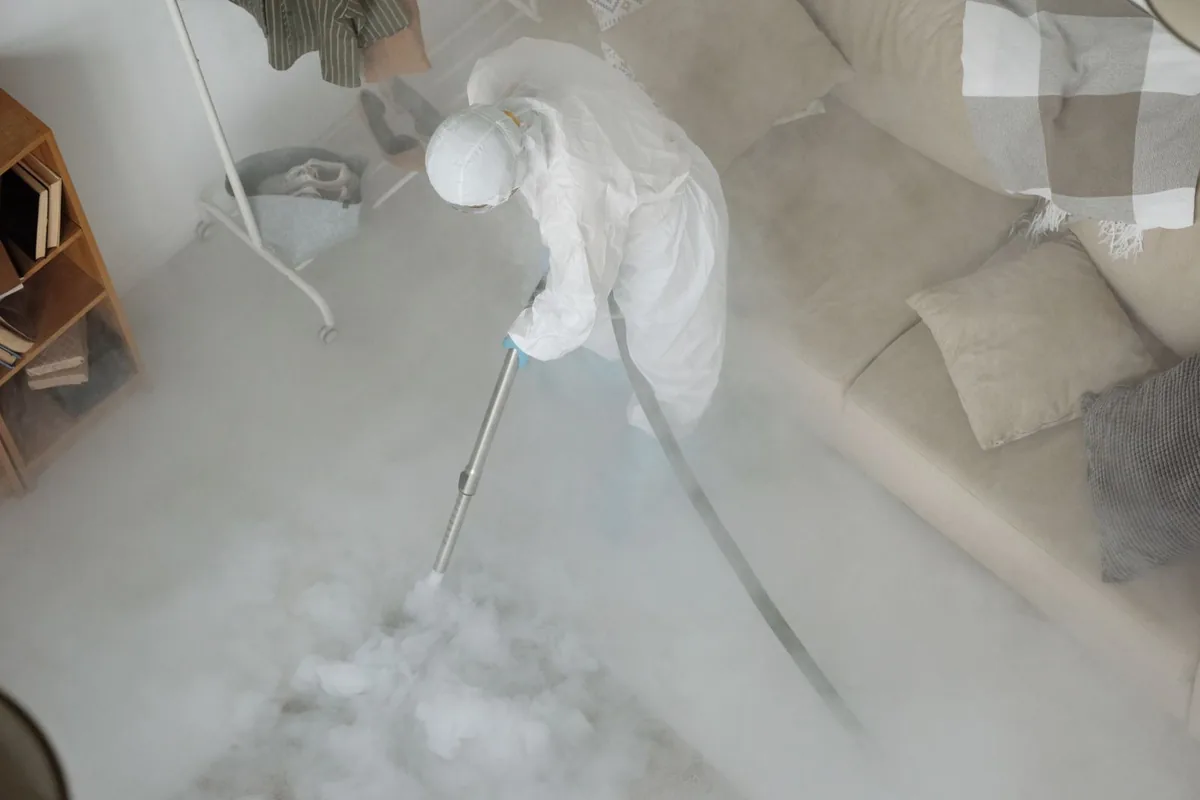
Biohazard cleaning is a specialty service for scenes that ordinary cleaners should not touch. It covers body fluids, human waste, needles, decomposition and sewage, and it ends with disinfection of the affected area.
Need biohazard cleaners in Honey Grove or nearby parts of Fannin County? Get help from Honey Grove Biohazard Cleanup Help. Your crew uses EPA-registered disinfectants, removes contaminated materials and sets aside personal property and keepsakes for the family.
Homeowners make up most of Fannin County, with renters at about 21% of households, and homeowners insurance is often the first place to check for biohazard coverage. For a violent crime in Fannin County, law enforcement such as the Fannin County Sheriff's Office must release the scene before biohazard cleaning can start.
A typical biohazard cleanup job includes:
The crew leader asks about the people, the property and any concerns about privacy. Equipment is packed to match the type of contamination.
Crews wear gloves, eye protection, respirators and disposable suits. Doors close, vents are managed and the work zone is marked.
Crews in protective suits remove contaminated materials and clean hard surfaces from the outside of the stain inward. Waste is sealed as it is collected.
Waste is packed for regulated hauling, and odor is treated at its source. The crew shows the owner the finished area and explains the paperwork.
Most biohazard cleanup jobs in Honey Grove, TX cost between $1,500 and $25,000, based on published cost guides.
The price of biohazard cleanup depends mostly on how large the affected area is and how deeply the contamination soaked in. A spill on a hard floor takes far less work than fluids that reached carpet, padding and subfloor.
| Type of job | Typical range |
|---|---|
| Typical national range | $3,000 - $5,000 |
| Full published span | $1,500 - $25,000+ |
| Residential average range | $1,800 - $4,500 |
| Most residential projects | $2,500 - $8,000 |
Estimates only, not a quote. Sources: Fixr, Yelp Costs, Biohazard cleanup cost guide from a biohazard cleanup company. Price drivers include type of contamination, size of the affected area, how far fluids soaked into porous materials, waste handling and disposal. Call (877) 812-4220 to talk through the job.
A small spill on a hard floor can take a few hours. Larger scenes, soaked carpet and subfloor, or heavy odor take longer. The crew can give a better timeline after seeing the site.
Yes. Dried blood can still carry bloodborne pathogens, and scraping or sweeping it can put particles in the air. Leave it alone, keep people away and have a cleanup team treat it with protective gear.
Frequently. If a policy covers the event, it can pay after the deductible. The Texas Crime Victims' Compensation Program, run by the Office of the Attorney General, pays up to $2,250 for crime scene clean-up for crimes after July 14, 2016, with insurance used first and claims filed within three years. Questions go to (800) 983-9933.
Yes. Sewage carries bacteria and viruses, so crews remove contaminated materials, clean and disinfect the area and dry it when needed. A plumber fixes the pipe, and the cleanup team takes care of what the backup left behind.
Items that can be cleaned are cleaned, and keepsakes and personal property are set aside for the family. Porous items that fluids soaked into often must be removed. The crew explains each choice before disposing of anything.
Keep people and pets away from the area, and do not touch or wipe anything. Open an exterior window only if it is safe, and photograph what you can for insurance from a distance. Call 911 first if anyone is in danger.
Questions about insurance, privacy or timing are welcome.
Call (877) 812-4220